



GPS Dog Tracker: Battery Life and Real-Time Accuracy
A GPS dog tracker is only as good as two numbers: how long the battery lasts, and how close the dot on your screen is to the dog in the real world. Everything else — the app colours, the social features — is decoration. Here is what those two numbers really depend on.
Most buyers compare trackers by price or by feature lists and never ask the two questions that decide whether the device works on the day it matters. A collar that dies at lunchtime, or that shows your dog two streets over when he is in the next garden, is not a tracker. It is a hope.
Let us take the two numbers apart, because they are more connected than they look.
Battery life: the number that decides if it is on
A GPS dog tracker has two power bills. One is GPS itself — pulling a location fix from satellites is the expensive part. The other is the radio that sends that fix to your phone, usually over cellular or Bluetooth. The balance between them is the whole game.
Vendors quote battery life in wildly different conditions, so the only honest comparison is "how often do I charge it in real use." A device that promises two weeks but needs charging every other day with live tracking on is lying by definition. Look instead for:
- Track mode versus safe mode. High-frequency live tracking drains fast; a low-power "I'm home, just check occasionally" mode lasts far longer. A good tracker lets the dog be boring most of the time and only spends battery when you actually ask for a live fix.
- Recharge time and method. A collar you can top up in an hour is more useful than one that needs a full overnight charge.
- What the battery rating assumes. If the fine print says "up to 14 days with 5 minutes of tracking per day," that is not 14 days of real tracking. Treat it as the ceiling, not the experience.
The rule we build to
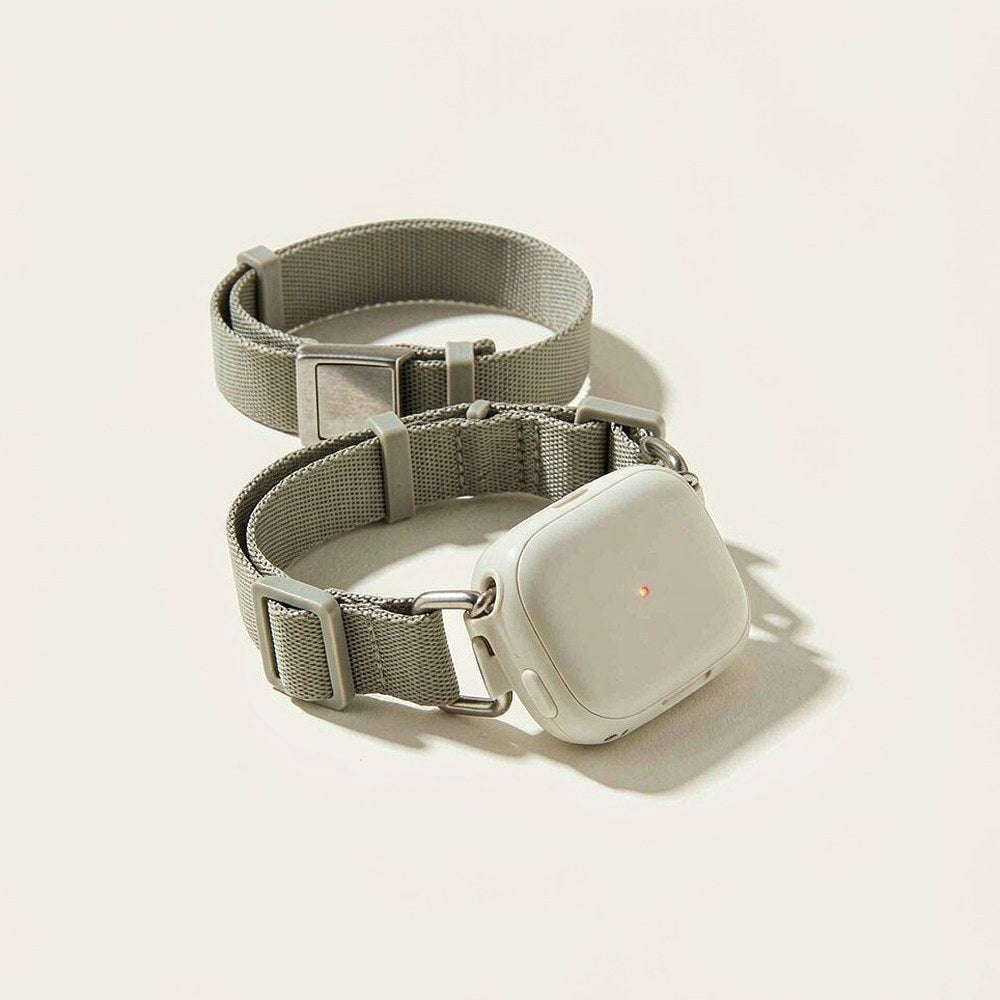
Tracking should survive a long day out and a missed charge. The Zaverni Trace Collar is built to last through real use — not a lab scenario — and to tell you, honestly, when the battery is getting low rather than dying without warning.
Real-time accuracy: what "real-time" really means
Accuracy has two parts. Position accuracy is how close the reported point is to the dog. Update interval is how often that point refreshes. A tracker can be accurate to three metres but update every five minutes — which, for a running dog, is effectively useless.
| Factor | Helps | Hurts |
|---|---|---|
| Open sky (park, field) | Fast, accurate GPS lock | — |
| Dense trees / tall buildings | — | Slow lock, drift of tens of metres |
| Indoors | Wi-Fi / beacon fallback | Pure GPS often loses the fix entirely |
| Update interval | Frequent fixes (seconds) for live tracking | Long intervals save battery but lag movement |
| Network coverage | Strong cellular sends fixes quickly | Dead zones delay the update you need most |
The honest takeaway: no consumer tracker is pinpoint-perfect everywhere. The ones worth owning are honest about it — they show you the confidence of the fix and refresh often enough that a moving dog stays on screen.
Why update interval matters more than the marketing photo
A dog that bolts covers ground fast. If your tracker updates every few minutes, the "live" map is a series of dots that the dog has already left behind. For real-time dog tracking, the interval is the spec that matters most during the one moment you actually need it.
Subscription walls: the part nobody reads
Here is the trap. Many trackers are cheap to buy and expensive to own, because the cellular radio that sends the fix needs a data plan — and that plan is often mandatory, forever. You do not buy a tracker; you lease one.
A dog tracker without subscription is possible, but it usually means the collar talks to your phone over Bluetooth or Wi-Fi rather than the cellular network. That trades range for freedom: it works brilliantly near home and poorly across a county. The right choice depends entirely on the dog and the life.
- Mostly-home dog, fenced yard: a Bluetooth/Wi-Fi model is plenty, and you never pay a monthly fee.
- Runner, hiker, rural property: cellular range is worth the plan — but buy it knowing the cost is permanent.
- Worst of both: a cellular tracker whose basic locate function is locked behind a higher tier. Avoid that.
Local-first, even when tracking
The collar should record position and alert on a safe-zone breach using its own logic, not a server you pay monthly just to exist. At Zaverni we keep the core tracking local and free; connectivity is there when you need range, not a toll you pay to be allowed to find your dog.
What to check on the spec sheet
- Battery in "real use," not "up to." Ask owners, not the box.
- Update interval in live mode. Seconds, not minutes, when you hit track.
- Coverage technology. Cellular, Bluetooth, Wi-Fi, or a mix — and what each costs.
- Low-battery behaviour. Does it warn you with time to spare, or just die?
- Weight and fit. A heavy tracker on a small dog is a neck ache; check grams, not just millimetres.
- What the plan actually unlocks. If locating is behind a paywall, walk away.
Where this fits a calmer smart home
A tracker earns its place only if, on the worst day, it tells you where the dog is and keeps working long enough to get there. That is a low bar and a surprising number of devices miss it. The rest of the smart home — feeder, camera, box — should report to one quiet app so that when something goes wrong you are looking at one screen, not five.
That is the standard we hold ourselves to at Zaverni: the hardware has to be dependable at the edges, when nobody is watching and the dog is already gone. Everything else is a nice-to-have.
Does a tracker replace a microchip or a fence?
No, and it is worth being clear about the division of labour. A microchip is permanent identification that a vet or shelter can read — it gets your dog home if someone finds him. A fence is prevention. A tracker is what you reach for in the gap between "he got out" and "he is found." They are complementary, not interchangeable.
Keep the chip updated, keep the fence sound, and treat the tracker as insurance for the day both of those fail.
Test a tracker before you trust it
Do not wait for an emergency to learn how your device behaves. Run this once, on a normal walk:
- Walk a known route and watch the map update. Note the lag between real position and the dot on screen.
- Step behind a building and see how the accuracy degrades, then recovers.
- Let the battery drop to 20% and confirm you get a warning with enough time to charge.
- Trigger the safe-zone alert by walking out of the zone, and time how fast it arrives.
- Check a dead zone — a basement or a rural dip — so you know the fallback behaviour.
A tracker that passes all five on a calm Tuesday is one you can trust on a panicked Saturday.
Frequently asked questions
How long does a GPS dog tracker battery actually last?
It depends entirely on tracking mode. In low-power "safe" mode a good collar lasts over a week; in continuous live tracking it may need a daily charge. Always judge by real-use reports, not the "up to" number on the box.
Is real-time tracking accurate enough to find a running dog?
Position accuracy is only half of it. The update interval matters more: a tracker that refreshes every few seconds keeps a moving dog on screen, while one that updates every few minutes shows places he has already left.
Do I need a subscription for a GPS dog tracker?
Only if the tracker uses a cellular network to send fixes — and that plan is usually mandatory and permanent. Bluetooth or Wi-Fi trackers avoid the fee but have much shorter range. Choose based on how far your dog actually roams.
Why does my tracker lose the signal indoors?
GPS needs a clear view of the sky. Indoors, the fix degrades or drops, so good trackers fall back to Wi-Fi or a beacon. If you mostly worry about a dog slipping out the door, look for that fallback rather than raw GPS specs.
Can a tracker work without the internet?
The collar can record position and trigger a safe-zone alert using its own logic, then send it when a connection returns. Core tracking should not require a live server — that is the local-first approach we build to at Zaverni.
A tracker that lasts the day and tells the truth
The Zaverni Trace Collar is built for real-use battery life, frequent live updates, and core tracking that stays free — no paywall on finding your dog.
See the Trace Collar →Zaverni Journal · Smart pet tech, designed for the home you share. This guide is editorial content and does not replace trained advice for escape-prone or anxious dogs. Microchipping and local regs still apply.