


Multi-Cat RFID Feeder: How to Feed Two Cats Two Different Diets
One cat needs a prescription renal diet. The other is eleven kilos and should not touch it. In a multi-cat household, free feeding stops working the moment diets diverge — and that is exactly what a multi-cat RFID feeder is built to solve.
Ask anyone with two cats what actually goes wrong at mealtimes and you will hear the same three stories. The fast eater finishes first, then shoulders the slow one out of the way. The cat on the special diet gets bullied off her bowl and eats the wrong food instead. And nobody can say with confidence how much either cat really ate today.
Those are not discipline problems. They are a design problem: a bowl is an open resource, and cats are very good at exploiting open resources.
Why open bowls break down with more than one cat
Cats do not eat as a group in the way dogs sometimes do. A cat's natural pattern is many small meals, taken alone. Put two cats on one resource and you create three predictable outcomes:
- Resource guarding. One cat controls the bowl, the other eats around the edges of that cat's schedule.
- Diet crossover. The prescription food goes to the wrong animal, which means the diet does not work and the bill keeps coming.
- Silent overeating. The cat who finishes first eats the second portion, and weight creeps up while nobody sees it happen.
Separating cats into different rooms at mealtimes does work, but it costs you two things: your morning, and consistency. Any solution that depends on you being present and punctual eventually slips.
What RFID actually does here
RFID (radio-frequency identification) is a short-range tag read by an antenna. In a feeder, the antenna sits around the bowl or at the entry. When a cat wearing a collar tag — or carrying an existing microchip, depending on the model — comes close, the feeder identifies her and responds according to her own rule set.
Three behaviours matter, and they are separate features worth checking individually:
| Behaviour | What it does | When you need it |
|---|---|---|
| Open for me | Lid stays shut until the registered cat approaches, then opens | One cat on a prescription or weight-management diet |
| Not for you | Lid stays shut for an unregistered cat, or closes when the wrong cat approaches | Food stealing between cats |
| Portion per cat | Each cat gets her own daily allowance, tracked separately | Weight control, or monitoring a cat who is eating less |
The second row is the one people buy the feeder for and the one manufacturers implement most inconsistently. A lid that opens for everyone is a novelty. A lid that stays shut for the wrong cat is the actual product.
Two flavours of identification
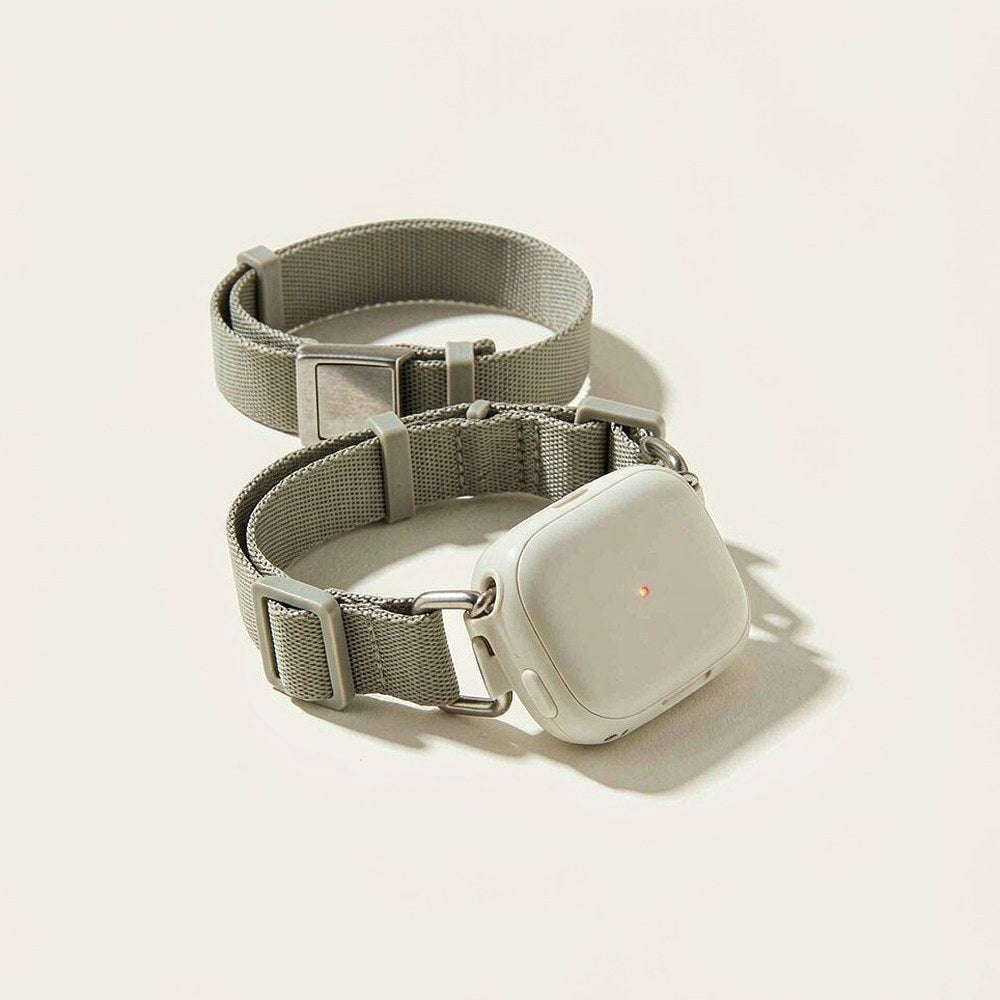
Collar tag: cheap, replaceable, works with any cat, but collars come off — use a proper breakaway collar and check the fit. Microchip: nothing to lose, but the reader has to find a chip that sits between the shoulder blades and can move slightly, so placement and antenna design matter a lot.
Collar tag or microchip reader?
This is the real fork in the decision, and it depends on your cats more than on the spec sheet.
Collar tag systems
- More reliable reads, because the tag sits right at the bowl.
- Works for any cat, including those without a chip or with a migrated chip.
- Collars do come off. Budget for spares and check weekly.
Microchip readers
- Nothing to wear, nothing to lose, nothing to replace.
- Read reliability varies with chip position and how the cat lowers her head.
- Some cats simply never trigger the reader consistently — worth knowing before you commit.
If your household has a cat who will not reliably trigger a chip reader, a collar-tag feeder is the safer buy. If you have a cat who removes collars for sport, the opposite applies. There is no universal answer, and any brand that claims otherwise is simplifying.
Getting two cats onto a new feeder without drama
Most failed installations are training failures, not hardware failures. This sequence works and takes about two weeks.
- Install it with the lid disabled for the first two or three days. Let both cats eat from it freely so the object itself is boring.
- Introduce the tag on a collar and let the cat wear it loose for a day before the feeder enforces anything.
- Enable selective mode for the target cat only. The other cat should still find a normal open bowl elsewhere in the house during transition.
- Shrink the portions in the open bowl gradually over seven to ten days, moving the volume into the selective feeder.
- Watch the log, not the cats. Per-cat records tell you whether the right cat is eating, which you cannot reliably judge by watching.
- Keep one unrestricted water source and, for the non-diet cat, a fallback bowl until you are confident.
Two feeders beat one, sometimes
If your cats eat at the same time and one blocks the other, a single selective feeder can become a queue. Two units placed out of sight of each other removes the standoff entirely. It costs more, but it ends the behaviour rather than relocating it.
What the data is for
Per-cat logging is the quiet payoff. Not because dashboards are interesting, but because a change in appetite is one of the earliest signals that something is wrong with a cat. When you can see that one cat went from twelve visits a day to five over a week, you have something concrete to take to the vet.
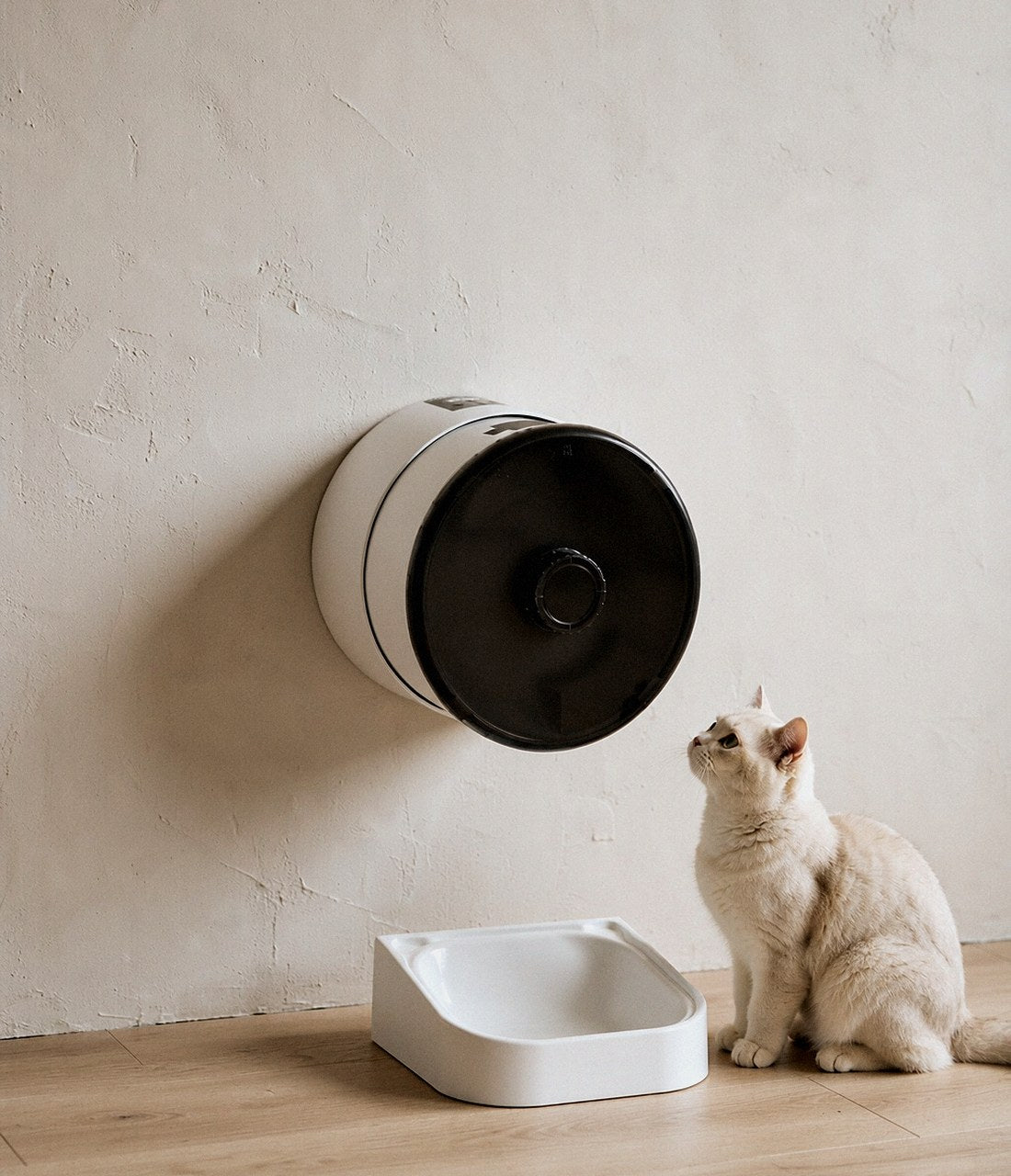
That is also why the history should live on the device and sync afterwards, rather than streaming only while online. Records that vanish during a Wi-Fi outage are not records. The same principle applies to feeding schedules: a Mingle Feeder keeps its programme in local memory so meals happen whether or not the network is up.
Checklist before you buy
- Per-cat rules, not per-device. Different portions, different foods, different time windows.
- A lid that actually locks for the wrong cat — read reviews specifically about this.
- Local storage of the feeding log, syncing later when a connection is available.
- No subscription for core access. History and identification should not be behind a monthly gate.
- Washable bowl and hopper. Two cats means twice the cleaning; awkward parts get skipped.
- Quiet mechanism. A lid that snaps loudly will undo weeks of training.
- Spare tags available and simple to register.
When a selective feeder is not the answer
Be honest about three cases. If the problem is genuine aggression rather than opportunistic stealing, a feeder will not fix it and you need behaviour help. If a cat is losing weight or eating markedly less, see a vet before you buy hardware — appetite changes are medical until proven otherwise. And if diets are identical and weights are stable, two plain bowls in separate rooms may be all you need.
Where a multi-cat RFID feeder genuinely earns its place is the household with divergent diets, a cat who needs measurable portions, or a slow eater who never gets a fair turn. In those cases it removes a daily argument, which is a better return than most pet gadgets manage.
And it should do that without turning your kitchen into a control room. Feeding, tracking, cleaning and monitoring belong together in one quiet app, because the point of smart pet tech is fewer things to manage, not more.
Frequently asked questions
How does a multi-cat RFID feeder work?
An antenna near the bowl reads a tag on the cat's collar, or the cat's existing microchip depending on the model. The feeder matches the ID to that cat's rule set and opens the lid only for her, dispensing her own portion and logging the meal under her name.
Can it read my cat's existing microchip?
Some models can. Reliability depends on where the chip sits and how the cat lowers her head, so results vary between cats. If your cat does not trigger a microchip reader consistently, a collar-tag feeder is the more dependable choice.
Will a selective feeder stop my cat stealing the other cat's food?
Yes, if the lid genuinely stays shut for unregistered cats. That is the single feature to verify in reviews before buying, because implementation quality varies widely. Look for reports from owners of determined food thieves.
How long does it take to train two cats on it?
Plan for roughly two weeks: a few days with the lid disabled, a day wearing the tag collar, then selective mode for the target cat while you gradually shift portions out of the open bowl. Rushing the transition is the usual reason it fails.
Do I need one feeder per cat?
Not always, but it helps if both cats eat at the same time or one blocks the other. Two units placed out of sight of each other removes queueing and the standoff that comes with it.
Can I track how much each cat eats?
That is the main long-term benefit. Per-cat logs show portion size, visit count and timing, so a gradual drop in one cat's appetite becomes visible early — useful information to bring to your vet.
Two cats, two diets, no arguments
The Zaverni Mingle Feeder identifies each cat, serves her own portion, keeps the schedule in local memory and reports it all in one quiet app — no subscription required for the core feeding functions.
See the Mingle Feeder →Zaverni Journal · Smart pet tech, designed for the home you share. This guide is editorial content and does not replace veterinary advice. Changes in appetite, weight or behaviour warrant a vet visit before any hardware purchase.